For International Patients — IC Clinic Tokyo
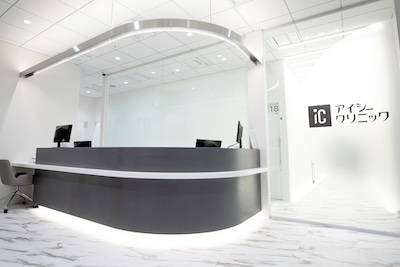
IC Clinic Tokyo is a dermatology and plastic surgery clinic a 3-minute walk from the Yaesu Exit of Tokyo Station (also about 5 minutes from Nihonbashi Station and 4 minutes from Kyobashi Station). We perform same-day outpatient surgery covered by Japanese health insurance for conditions such as epidermoid cysts (atheroma), lipoma, moles, warts and underarm odor (wakiga), as well as self-pay cosmetic dermatology treatments.
We welcome patients from overseas who live in or are visiting Japan. This page explains how we communicate, how Japanese health insurance works at our clinic, what treatment costs, how to pay, what to bring, and how to book an appointment in English.
1. How we communicate
- You do not need to speak Japanese to visit us. At reception and during your consultation, our staff and doctors communicate with you in English using translation apps. This applies to check-in, the consultation, and explanations after surgery.
- English versions of our intake form and consent forms are available.
- A Japanese-speaking companion is welcome but not required. If you would like to discuss detailed medical questions, bringing a companion who speaks Japanese can make the conversation smoother.
- Our phone line is answered in Japanese only. To book in English, please use the online form linked on this page.
2. Japanese public health insurance
- IC Clinic Tokyo is primarily an insurance-based clinic. If you are enrolled in Japanese public health insurance (National Health Insurance, employee health insurance, etc.), you pay only your co-payment at the counter for treatments that insurance covers.
- Your co-payment rate depends on your age and income. For most working-age adults it is 30% of the fee schedule.
- At check-in, we verify your insurance eligibility. Please bring your My Number Card registered as a health insurance card, or your eligibility certificate (資格確認書).
- Whether a treatment is covered by insurance is decided by the doctor at the consultation, based on medical necessity. Purely cosmetic treatment is self-pay.
- Examples of treatments that can be covered by insurance: surgery for epidermoid cysts (atheroma), surgery for lipoma, mole removal (when it meets the medical criteria), wart treatment (cryotherapy or excision), surgery for underarm odor (wakiga), and earlobe repair.
- If you forget your insurance card or certificate, you can still be seen. You will pay the full amount on the day; if you bring valid proof of eligibility and your receipt within the same calendar month, we can settle the difference at the clinic. After that month, please apply to your insurer for reimbursement.
3. If you are not enrolled in Japanese health insurance
- Short-term visitors and anyone not enrolled in Japanese public health insurance are treated on a self-pay basis. For treatments that would normally be covered by insurance, you pay 100% of the standard Japanese medical fee schedule (instead of the 30% co-payment).
- We will give you an estimate before treatment. If you have overseas travel insurance, we can issue receipts and, on request, an English medical certificate (see section 8) for your claim.
4. Typical costs (estimates, tax included)
All amounts below are estimates. Costs vary with the site, size and number of lesions and with the tests required. Consultation, prescription and laboratory fees are charged separately.
- Self-pay cosmetic treatments (laser, miraDry, HIFU, etc.): see the English price list and each treatment page.
- Medical certificate: ¥5,500 per copy (tax included). Itemized fee statement: ¥3,300 per copy.
5. Payment
- Insurance-covered treatment: cash (Japanese yen) only.
- Self-pay treatment: cash or credit card.
- Electronic money and QR-code payments are not accepted.
6. What to bring
- Your My Number Card registered as a health insurance card, or your eligibility certificate (if you are enrolled in Japanese health insurance)
- Your residence card or passport (required for identification)
- Information about any medicines you take (medication notebook, prescription copy, or the packaging). If you take blood thinners, please tell us before surgery — some medicines must be paused, and your prescribing doctor must confirm it is safe to do so.
- Payment (cash for insurance-covered treatment)
- If the patient is under 20: a parent or guardian must accompany the patient for surgery, or bring a signed and sealed consent form from the guardian.
7. How a visit works
- Book online using the English form. Choose your symptom category and preferred date and time. We work on an appointment-priority basis; walk-ins are accepted but may wait.
- Check-in. Staff will verify your insurance eligibility and identification and give you the English intake form.
- Consultation. The doctor examines the lesion, performs any necessary tests (such as ultrasound), and explains the treatment options and costs.
- Treatment. For epidermoid cysts and similar conditions, same-day surgery is possible when the doctor judges it appropriate. Lipoma usually requires an MRI first, with surgery on a later day.
- Payment at the counter.
- Follow-up. Stitches are usually removed about two weeks after surgery. A dressing or bandage is typically kept on for one to two weeks and can be removed once the wound has closed and is not bleeding; your doctor will advise you, as healing varies from person to person.
If you notice increasing pain, fever, swelling, or discharge from the wound after surgery, please contact us promptly.
8. Medical certificates and documents in English
- We can issue medical certificates in English (¥5,500 per copy, tax included). Certificates are prepared and sent by post; please ask at the counter or by the inquiry form.
9. Hours and access
- Hours: 10:00–19:00 (closed 14:00–15:00; last reception 18:30). Open on Saturdays and Sundays. Closed on some days such as the New Year holidays.
- Address: Nihonbashi Front 3F, 3-6-2 Nihonbashi, Chuo-ku, Tokyo 103-0027
- 3–5 minutes on foot from JR Tokyo Station (Yaesu Central Exit), 5 minutes from Nihonbashi Station (subway), 4 minutes from Kyobashi Station (subway). Detailed directions: Access
- No parking is available.
- Phone: 0120-140-144 (Japanese only)
10. How to book
- Online (English): https://ic-clinic.com/en/reservation/tokyo/
- If an epidermoid cyst is inflamed or has burst, please note this in the form so we can see you promptly. Do not squeeze it; wash gently and cover with gauze.
11. Frequently asked questions
I don’t speak Japanese. Can I still be seen? Yes. Our staff and doctors use translation apps to communicate with you in English, and English intake and consent forms are available.
I’m not enrolled in Japanese health insurance. Can I be treated? Yes. You will be treated on a self-pay basis and pay 100% of the standard fee schedule.
Can I have surgery on the same day? For epidermoid cysts and some other lesions, same-day surgery is possible when the doctor judges it appropriate. Lipoma requires an MRI first, so surgery is scheduled for a later day.
Can I pay by credit card? Credit cards are accepted for self-pay treatment. Insurance-covered treatment is cash only. Electronic money is not accepted.
Can I get a medical certificate in English? Yes. Certificates cost ¥5,500 per copy (tax included) and are sent by post.
Can I bring my child? Children can accompany you up to the consultation, but cannot enter the treatment room during surgery or procedures. If your child cannot wait alone in the waiting area, please come with another adult.
When can I shower, bathe and return to work after minor surgery? This varies with the procedure and the individual. Your doctor will give you specific instructions; see also our article on aftercare after minor skin surgery.
12. Treatments for international patients
13. Articles for international patients
- How to Get an Epidermoid Cyst (Atheroma) Removed in Tokyo: Steps, Costs and Insurance
- Is Mole Removal Covered by Japanese Health Insurance? Conditions and Self-Pay Options
- Skin Tag Removal in Tokyo: Methods, Prices and What Happens on the Day
- Wart Removal in Japan: Cryotherapy vs. Surgery and Insurance Coverage
- Underarm Odor (Wakiga) Treatment in Japan: Insurance-Covered Surgery vs. miraDry
- Seeing a Dermatologist in Japan Without Speaking Japanese: What to Bring and How the Visit Works
- Using Japanese Health Insurance at a Skin Clinic: Co-Pay, Eligibility Check and Documents
- Same-Day Cyst Surgery in Tokyo: Who Qualifies, What to Expect and Aftercare
- Lipoma Removal in Tokyo: MRI First, Then Day Surgery Under Health Insurance
- Aftercare After Minor Skin Surgery in Japan: Stitches, Bathing, Work and Follow-Up
- Worried About a Mole? When to See a Doctor in Tokyo (Dermoscopy Check)
- What Minor Skin Surgery Costs at a Tokyo Clinic: Insurance (30% Co-Pay) vs. Self-Pay Examples
- miraDry in Tokyo: How the Treatment Works, Downtime and Cost (English Guide)
- HIFU in Tokyo: What to Expect, Downtime and Pricing (English Guide)
- Your First Visit to IC Clinic Tokyo: Booking in English, Check-In, Consultation and Payment
Supervising physician: Kota Takakuwa, M.D., IC Clinic Tokyo