Introduction
A lipoma is a soft lump of fatty tissue that forms beneath the skin. Most lipomas are benign and do not require urgent treatment; however, they do not shrink on their own and tend to grow slowly over time, so surgical removal is generally recommended at some point.
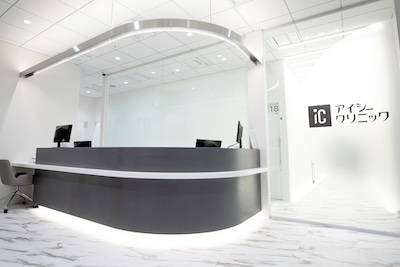
One important difference between lipoma surgery and epidermoid cyst (atheroma) removal in Japan is that surgery is not performed on the day of the first visit. Instead, an MRI scan is arranged at a partner medical facility beforehand, and surgery is scheduled for a separate date. This article explains the lipoma treatment process at IC Clinic Tokyo (a 3–5 minute walk from Yaesu Exit of Tokyo Station) in three steps—initial consultation, MRI scan, and same-day surgery—along with an overview of costs when using health insurance, and guidance on what to expect on the day of surgery and during recovery.
Confirming Whether It Is a Lipoma: Starting with a Consultation
- A lipoma typically appears as a soft, rubber-like lump beneath the skin with no change in skin color. It is usually painless, though it may cause discomfort if it presses on a nerve. Lipomas can range from around 1 cm when first noticed to nearly 10 cm in size. They commonly develop on the neck, shoulders, and back, as well as the thighs, shins, and buttocks, and are most frequently seen in people in their 40s and 50s.
- Lipomas are sometimes confused with epidermoid cysts; however, lipomas do not become inflamed or produce an odor. Conversely, a red, swollen, and painful lump may indicate an inflamed epidermoid cyst, which may require treatment on the same day. Because self-diagnosis can be difficult, we recommend coming in for a consultation first.
- If a lump has grown rapidly over a few months, is larger than 10 cm, is painful, or feels hard, there is a rare possibility of a malignant tumor such as liposarcoma, and we encourage you to seek medical attention promptly. Whether a tumor is benign or malignant can be difficult to determine from imaging alone; a pathological examination of the removed tissue is used for confirmation.
Treatment Process: Initial Consultation → MRI → Same-Day Surgery on a Separate Date
Step 1: Initial Consultation (at our clinic) A physician will examine you, and if a lipoma is suspected, an MRI scan will be arranged at a partner medical facility. The scan will be scheduled for a later date on a reservation basis. Surgery can also be booked at the same time.
Step 2: MRI Scan (at a partner medical facility) You will have your MRI scan at the partner facility. The imaging data will be forwarded to our clinic. The scan generally finishes close to the scheduled time, so many patients fit it in between work commitments.
Step 3: Same-Day Surgery (at our clinic) Once the physician has reviewed the MRI results and confirmed there are no concerns, you will return to our clinic for a follow-up consultation, after which same-day surgery will be performed. Hospitalization is not required, and you will be able to go home the same day.
- Why surgery is not performed on the day of the first visit: A lipoma may be located deep within or between muscles. It is necessary to assess the depth, extent, and nature of the tumor before planning surgery.
- Surgery appointments on weekdays only: Under the current clinical schedule, lipoma surgery at IC Clinic Tokyo is generally available on weekdays only.
- Cases where surgery at our clinic may not be possible: Very large tumors, tumors in locations that require particular care, or tumors whose nature warrants additional attention may be referred to a university hospital or general hospital. Same-day surgery is not available for every case.
Estimated Costs (with Health Insurance, 30% Co-payment, Tax Included)
- Lipoma surgery is covered by health insurance. For patients with a 30% co-payment, the estimated cost of surgery is approximately ¥10,000–¥20,000. The final amount varies depending on the location of the lump (exposed vs. non-exposed area), its size, whether a pathological examination is performed, and any prescribed medications. Initial consultation fees, follow-up consultation fees, prescription fees, and medication costs are charged separately. For a size-based cost breakdown, please refer to the price list on our treatment page.
- If the lipoma is adherent to the fascia, a different billing classification may apply.
- The cost of the MRI scan is not included in the figures above.
- Your co-payment percentage may differ depending on your age and income. Patients who are not enrolled in Japan’s public health insurance system will be charged the full (100%) fee. Insurance-covered treatment at our clinic is payable in cash (Japanese yen) only.
- If you have private medical insurance, you may be eligible for a surgical benefit payment after undergoing insurance-covered surgery (procedure names include “皮膚皮下腫瘍摘出術” [excision of skin and subcutaneous tumor] and “軟部腫瘍摘出術” [excision of soft tissue tumor], among others). If you require a medical certificate, please let us know at the time of your visit (¥5,500 per document, tax included; available in English; postal application accepted).
What to Expect on the Day of Surgery and What to Bring
- What to bring: Your My Number health insurance card or eligibility confirmation document, your Residence Card or passport, cash, and information about any medications you are currently taking. If you are taking blood-thinning medication, surgery may not be possible unless you temporarily stop the medication beforehand. Please be sure to inform us at your initial consultation. (Whether you can safely pause the medication must be confirmed with the prescribing physician.)
- Surgery: The procedure is performed under local anesthesia. An incision is made directly over the lump (as a guide, the incision length is approximately two-thirds the diameter of the lump), the tumor is removed, bleeding is controlled, and the wound is closed with sutures. A drain (a small tube) may be placed if needed to prevent blood from pooling, and the area is compressed with gauze and elastic tape.
- Very fine sutures are used to close the wound. Depending on the case, absorbable sutures may be used to eliminate the need for suture removal, or a subcuticular technique may be chosen so that the stitches are not visible on the surface. The physician will determine the most appropriate method.
- The removed tissue will be sent for pathological examination to confirm that it is benign.
Recovery After Surgery
- Pain: Some discomfort may occur from the day of surgery through the following day. Pain relief medication will be prescribed.
- Exercise: Please avoid strenuous physical activity for approximately one week after surgery. After that, you may generally return to your usual routine. In many cases, you can return to work as long as the surgical area can be kept relatively still.
- Showering and bathing: If sutures have been used, showering is permitted from the day after surgery. Whether you can soak in a bath depends on the location and size of the wound; please ask the physician at the time of surgery.
- Bandages and dressings: As a general guide, the dressing may be removed after 1–2 weeks once the wound has closed and there is no bleeding (individual cases may vary; please check at your follow-up appointment).
- Suture removal: Sutures are typically removed around two weeks after surgery, though the timing may vary depending on the treatment approach; the recommended date will be communicated at the time of surgery. If absorbable sutures are used, suture removal may not be necessary.
- Redness of the scar: Redness typically begins to fade within about one week and gradually becomes less noticeable over time. Depending on the size and location of the lipoma, some scarring may remain.
- Symptoms that require contact: If you experience persistent wound pain, fever, swelling that does not subside, warmth around the wound, or discharge from the wound, please contact us promptly, as these may indicate infection or hematoma.
FAQ
Q1. Can the lipoma be removed on the day of my first visit?
A. As a general rule, an MRI scan is required before lipoma surgery, so surgery is not performed on the day of the initial consultation. At your first visit, the physician will examine you and arrange the MRI scan. Surgery will then be scheduled for a separate day after the results have been reviewed.
Q2. How many visits will be required for surgery?
A. The typical sequence is: initial consultation (at our clinic), MRI scan (at a partner medical facility), surgery (at our clinic), and a post-operative check-up and suture removal (at our clinic). The exact number of visits may vary depending on the surgical approach and your recovery.
Q3. Can a large lipoma be removed as a same-day procedure?
A. Same-day surgery is possible in many cases; however, very large tumors or those located in deep or difficult areas may be referred to a university hospital or general hospital. Whether same-day surgery is appropriate will be determined by the physician based on the consultation and MRI results.
For patients from overseas
You do not need to speak Japanese to visit IC Clinic Tokyo. Our staff communicate using translation apps, and English intake and consent forms are available. How Japanese health insurance works, self-pay costs, payment methods and what to bring are summarised on For International Patients.
IC Clinic Tokyo — Nihonbashi Front 3F, 3-6-2 Nihonbashi, Chuo-ku, Tokyo. 3–5 min walk from JR Tokyo Station (Yaesu Exit). Hours 10:00–19:00 (closed 14:00–15:00, last reception 18:30), open Saturdays and Sundays.
Supervising physician: Kota Takakuwa, M.D., IC Clinic Tokyo