Frequently Asked Questions (FAQ)
IC Clinic Tokyo specializes in skin beautification treatments for conditions such as pigmented spots, dullness, and melasma. This page compiles common questions from our patients along with their answers. Accurate medical information is provided under the guidance of board-certified plastic surgeons of the Japan Society of Plastic and Reconstructive Surgery.
Table of Contents
- Questions about Pigmented Spots
- Questions about Melasma
- Questions about Freckles & ADM
- Questions about Treatment Methods & Costs
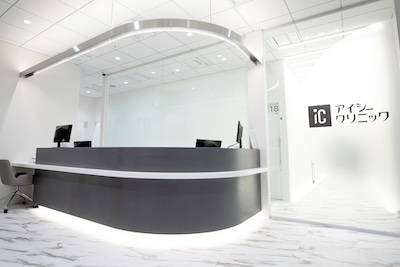
- Questions about IC Clinic Tokyo
Questions about Pigmented Spots
Pigmented spots come in many different types, each with distinct causes and treatment approaches. Appropriate treatment based on an accurate diagnosis is essential.
There are several main types of pigmented spots. Solar lentigines (age spots) are the most common type, caused by UV exposure. Melasma appears as light-brown patches distributed symmetrically around the cheekbones and is associated with hormonal balance. Freckles (ephelides) are small spots that appear from childhood due to genetic factors. ADM (Acquired Dermal Melanocytosis) is a bluish pigmentation found in the dermis. Treatment approaches differ depending on the type.
The primary cause of pigmented spots is UV exposure. When the skin is exposed to UV rays, melanocytes (pigment cells) produce melanin, which accumulates and forms spots. Other contributing factors include a decline in skin cell turnover due to aging, hormonal imbalances (such as pregnancy or oral contraceptive use), post-inflammatory hyperpigmentation (from acne scars, wounds, etc.), and irritation from friction.
This depends on the type of spot. Post-inflammatory hyperpigmentation (such as spots from acne scars) may naturally fade over several months to about a year through skin cell turnover. However, solar lentigines, melasma, ADM, and similar spots rarely disappear on their own and tend to darken or increase in number over time. We recommend consulting a specialist early if you are concerned about any spots.
Pigmented spot removal is mainly performed at cosmetic dermatology clinics. General dermatology clinics offer insurance-covered treatment for certain types of spots (such as nevus spilus and nevus of Ota), but common spots such as solar lentigines and melasma are not covered by insurance and require out-of-pocket payment, making cosmetic dermatology clinics with comprehensive laser equipment more suitable. Please note that what appears to be a spot may occasionally be skin cancer, so an accurate diagnosis is important first.
After laser spot removal treatment, a temporary darkening of the treated area known as “rebound pigmentation” (post-inflammatory hyperpigmentation, PIH) may occur. This is a reaction in which melanin temporarily increases due to the laser stimulus and is more likely to occur in Asian individuals, including those of Japanese descent. It generally fades naturally over 3 to 6 months. Sun protection and avoiding friction after treatment can help prevent or reduce this reaction.
The number of treatment sessions required varies depending on the type and depth of the spot. Faint solar lentigines can often be addressed in a single laser session, but darker spots or those located deeper in the skin (such as ADM) may require 3 to 5 or more sessions. Melasma is commonly treated with approximately 5 to 10 sessions of laser toning. An estimated number of sessions will be discussed with you during your consultation.
Pigmented spots and moles (nevi) may look similar, but they are medically distinct. Pigmented spots are caused by melanin pigment deposited in the skin and are generally flat. Moles (pigmented nevi) involve the proliferation of melanocytes (pigment cells) themselves and may be raised. Moles carry a risk of becoming malignant, so please consult a specialist if you notice any sudden changes.
The most important measure for preventing pigmented spots is UV protection. Apply sunscreen (SPF 30 or higher, PA+++ or higher) every day and make use of hats and parasols. UV rays reach the skin even on cloudy days and indoors, so year-round protection is necessary. Skincare products containing brightening ingredients such as vitamin C and tranexamic acid, adequate sleep, and a well-balanced diet are also helpful for maintaining healthy skin.
Questions about Melasma
Melasma is a type of pigmentation commonly seen in women in their 30s and 40s and requires a different treatment approach from ordinary pigmented spots.
Melasma is a light-brown pigmentation that appears symmetrically on areas such as the cheekbones, forehead, and upper lip. It commonly develops in women in their 30s and 40s and is thought to be related to hormonal balance, as it often appears following pregnancy or the use of oral contraceptives. It is characterized by blurry borders and a tendency to spread diffusely over a wide area. Because standard spot-removal lasers may worsen melasma, specialist diagnosis and treatment are necessary.
The main differences between melasma and ordinary pigmented spots (solar lentigines) are that melasma spreads symmetrically, has blurry borders, and tends to appear in specific areas such as the cheekbones and forehead. Solar lentigines have well-defined borders and appear as individual spots distributed asymmetrically. However, melasma and solar lentigines often coexist, so an accurate diagnosis requires examination by a specialist.
Using standard spot-removal lasers (such as Q-switched lasers) on melasma carries a risk of worsening the condition. However, laser toning—a method that involves repeatedly applying low-energy laser irradiation—may be beneficial for melasma. A combined approach using oral or topical tranexamic acid and vitamin C alongside laser toning is commonly used. Accurate diagnosis and appropriate laser settings are important for treatment.
Because melasma is related to individual constitution and hormonal balance, the general approach is to manage the condition rather than aim for a complete cure. Even if treatment causes improvement, melasma may recur due to triggers such as UV exposure, friction, or hormonal changes. However, it is possible to maintain a good condition through ongoing care and lifestyle adjustments. Many people also find that melasma naturally fades after menopause.
Tranexamic acid has been medically recognized as beneficial for melasma treatment. It works by suppressing melanin production. A common treatment approach involves taking it orally at 750–1,500 mg per day for several months, and it may also be applied topically. Using it in combination with laser toning or brightening skincare products may offer additional benefits. Please consult a physician before use.
The main factors that can worsen melasma are UV exposure, friction, and hormonal changes. Neglecting UV protection can lead to deterioration. Excessive friction from face washing or massage, and vigorously rubbing the face with a towel, can also act as irritants. Hormonal shifts due to oral contraceptive use or pregnancy may cause darkening. Stress and lack of sleep can also have an indirect impact, so reviewing your lifestyle habits is important.
Questions about Freckles & ADM
Freckles and ADM differ from common pigmented spots in their causes and treatment approaches. Here we explain the characteristics of each.
Freckles (ephelides) can be lightened with laser treatment or IPL (photofacial). Because freckles involve melanin deposited in the epidermis, lasers that target melanin may be helpful. However, since freckles are related to genetic predisposition, they may recur after treatment if the skin is exposed to UV rays. Consistent UV protection is important.
The main differences between freckles and pigmented spots (solar lentigines) are the age of onset and their appearance. Freckles appear from childhood due to genetic factors and present as small spots approximately 1–5 mm in diameter scattered mainly around the nose. Pigmented spots appear from the 20s onward due to cumulative aging and UV exposure, are relatively larger, and have more defined borders. Freckles tend to darken during puberty and gradually lighten with age.
ADM (Acquired Dermal Melanocytosis) is a type of pigmentation caused by the proliferation of melanocytes in the dermis (a deeper layer of the skin). It appears as gray to blue-brown pigmented patches on the cheeks, forehead, and nose, typically developing from the 20s onward. Because it is located deeper than ordinary epidermal spots, standard brightening skincare products are generally not effective, and laser treatment capable of reaching deeper layers—such as Q-switched lasers—is typically required.
ADM and melasma can look similar, but ADM is typically gray to blue-brown in color and tends to be distributed as small dots, whereas melasma is brown and spreads in a diffuse pattern. ADM is more commonly found on the outer cheeks, while melasma tends to spread over the cheekbones. The two conditions often coexist, and since treatment approaches differ, accurate diagnosis by a specialist is important. At our clinic, we use tools such as dermoscopy for diagnosis.
ADM treatment usually requires 3 to 5 or more laser sessions. Because ADM is located in the dermis, it is difficult to address fully in a single session, and the pigmentation is gradually lightened over multiple treatments. Sessions are typically spaced about 2 to 3 months apart, and completing the full course of treatment may take over a year. The treated area may temporarily appear darker after each session, but it will gradually lighten over time.
Questions about Treatment Methods & Costs
Here we explain the pigmented spot treatment options and associated costs available at our clinic.
Main treatment options for pigmented spots include: Q-switched laser (targets darker spots in a single session), picosecond laser (breaks down pigment into finer particles with shorter pulses), laser toning (low-energy irradiation for melasma and overall skin improvement), IPL/Photofacial (broad-area treatment for faint spots and dullness), Chemical Peeling (promotes skin cell turnover), topical medications (hydroquinone, tretinoin), and oral medications (tranexamic acid, vitamin C). The most suitable treatment is selected based on the type of pigmented spot.
The cost of laser spot removal varies depending on the size and number of spots. As a general guide, spot irradiation with a Q-switched laser or picosecond laser costs approximately ¥5,000–¥10,000 for spots up to 5 mm and approximately ¥10,000–¥20,000 for spots up to 10 mm. Laser toning and IPL for the full face cost approximately ¥15,000–¥30,000 per session, and multiple sessions are required. Detailed costs will be provided during your consultation.
Treatment for common pigmented spots (such as solar lentigines, melasma, and freckles) is considered cosmetic in nature and is therefore not covered by health insurance, making it an out-of-pocket expense. However, laser treatment for certain types of spots—such as nevus spilus, nevus of Ota, aberrant Mongolian spots, and traumatic pigmentation—may be covered by insurance. Whether insurance coverage applies will be assessed and explained to you at the time of your consultation.
The main difference between picosecond lasers and Q-switched lasers is the pulse width (irradiation duration). Picosecond lasers irradiate in picoseconds (one trillionth of a second), while Q-switched lasers irradiate in nanoseconds (one billionth of a second). Because picosecond lasers use shorter pulses to break melanin into finer particles, they tend to cause less damage to surrounding tissue and involve a relatively shorter recovery period. However, depending on the type of spot, a Q-switched laser may be more appropriate.
Photofacial (IPL) and laser treatments differ in the nature of the light used. Lasers use a single wavelength of light to precisely target and break down melanin, making them well-suited for darker spots. IPL delivers multiple wavelengths of light over a broad area, allowing it to address multiple skin concerns at once—such as faint spots, dullness, redness, and enlarged pores. IPL is well suited for overall skin tone improvement, while lasers are more appropriate for removing darker individual spots.
The recovery period varies depending on the treatment. After Q-switched laser or picosecond spot irradiation, a scab forms at the treated site and naturally falls off within 1 to 2 weeks. Protective tape is required during this time. Laser toning and IPL involve minimal recovery time, and makeup can generally be applied immediately after the session. Regardless of the treatment, UV protection is important afterward—please be diligent about applying sunscreen.
Hydroquinone is a brightening ingredient that suppresses melanin production and is sometimes referred to as a “skin bleaching agent.” It may help prevent pigmented spots and improve the appearance of faint spots, and combining it with laser treatment before and after sessions can enhance results. Medical-grade hydroquinone at concentrations higher than those available over the counter (4% or above) requires a physician’s prescription. As the skin becomes more sensitive to UV rays during use, sunscreen must be applied consistently.
Questions about IC Clinic Tokyo
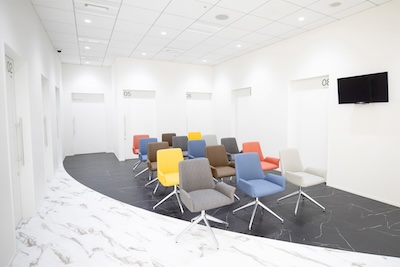
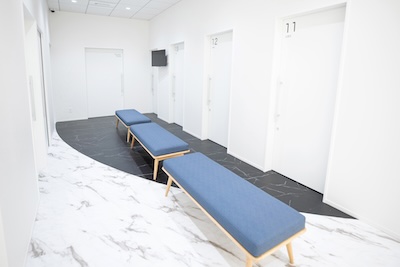
Here you will find information about access to our clinic and our medical services.
IC Clinic Tokyo is open from 10:00 to 19:00 (closed 14:00–15:00; last reception at 18:30). We are open on Saturdays and Sundays as well, making it convenient for those who are busy on weekdays. Please note that we are closed on certain days such as the New Year holiday period. For details, please check by phone or on our website.
IC Clinic Tokyo is located a 3-minute walk from Tokyo Station’s Yaesu Exit. Our address is Nihonbashi Front Building 3F, 3-6-2 Nihonbashi, Chuo-ku, Tokyo. Exit through the Yaesu Central Exit of Tokyo Station and proceed along Sotobori-dori toward Nihonbashi. The clinic is also accessible in approximately 5 minutes on foot from Nihonbashi Station on the subway.
Our clinic operates by appointment. Please book by phone (0120-140-144) or through our website. Walk-in visits are also accepted; however, please be aware that patients with appointments are given priority, which may result in a wait. We recommend making an advance appointment, especially for first-time visitors, as we set aside time for a consultation.
IC Clinic Tokyo specializes in skin beautification treatments for conditions such as pigmented spots, melasma, dullness, and freckles. We offer a range of laser treatments including Q-switched laser, picosecond laser, laser toning, and IPL (Photofacial). We also perform same-day outpatient surgery for epidermoid cysts (atheromas), lipomas, and similar conditions, carried out by board-certified plastic surgeons.
Yes, you are very welcome to visit us for a consultation only. We will examine your skin, provide an accurate diagnosis of your pigmented spots, and explain the treatment options and associated costs best suited to your situation. You are also welcome to compare multiple treatment options or discuss a treatment plan. There is no obligation to proceed with treatment on the day, so please feel free to come in and speak with us.
Supervising Physician
The content of this page has been supervised by a physician under the guidance of a board-certified plastic surgeon of the Japan Society of Plastic and Reconstructive Surgery at IC Clinic Tokyo. We are committed to providing accurate and reliable medical information on pigmented spots, melasma, and skin beautification treatments.