Introduction
Small skin-colored to light-brown growths that appear on the neck, underarms, or chest (known as skin tags) are benign lesions caused by aging and friction from clothing—not by a virus. They are not contagious and rarely cause health problems if left alone. However, many people choose to have them removed because they catch on clothing or jewelry, or because the number has increased over time.
This article uses IC Clinic Tokyo as an example to explain skin tag removal methods, costs (including when public health insurance may apply and when out-of-pocket payment is required), and what to expect on the day of your visit.
Here is a quick summary:
- If your goal is cosmetic improvement and you wish to remove multiple small skin tags at once, CO2 laser treatment (self-pay) is typically the approach. Pricing depends on the number and size of tags and is clearly stated inclusive of tax.
- If a physician determines that treatment is medically necessary—for example, because a skin tag is repeatedly catching and causing pain, bleeding, or inflammation, or because malignancy needs to be ruled out—surgical excision may be covered by public health insurance.
- Depending on appointment availability and the nature of your condition, treatment may be possible on the same day as your consultation. Japanese language ability is not required.
Three Skin Tag Removal Methods
IC Clinic Tokyo offers the following approaches for skin tags. A physician will recommend the most suitable method based on the number, size, and location of the tags as well as your preferences.
- CO2 (Carbon Dioxide) Laser (self-pay): This method uses laser energy to vaporize and remove tissue. It involves minimal bleeding and a relatively shorter recovery period, making it a suitable option for removing multiple small skin tags on the neck or chest at once. Local anesthesia (numbing cream or injection) is used. After treatment, redness and a light scab may appear for several days to a few weeks, and temporary hyperpigmentation may occur.
- Surgical Excision (may be covered by insurance): The skin tag is removed under local anesthesia using a scalpel, with suturing as needed. This method is chosen for larger lesions or when histopathological examination is needed to rule out malignancy. If sutures are placed, a follow-up visit for suture removal is required, and some scarring may remain.
- Cryotherapy (Liquid Nitrogen) (insurance-covered): While cryotherapy is a standard first-line treatment for viral warts, skin tags are not caused by a virus. Because hyperpigmentation tends to occur more readily on the neck, this method is generally not recommended for skin tags at our clinic.
Estimated Costs
Self-Pay (CO2 Laser) Pricing (Tax Included, Standard Rates)
For CO2 laser removal of skin tags (soft fibromas), the per-unit price varies depending on the total number treated.
In addition, an unlimited skin tag laser removal plan targeting tags 1 mm or smaller is available for ¥44,000 (tax included), as well as a trial option (up to 5 sites, 1 mm or smaller) for ¥5,500 (tax included) for those who would like to start with a smaller treatment. Tags 3 mm or larger are priced at ¥16,500–¥55,000 (tax included) depending on size.
The prices above are standard rates. Promotional pricing may be available from time to time. As this is self-pay treatment, public health insurance cannot be applied. A full cost estimate—including any consultation fees—will be provided at the time of your appointment.
Estimated Cost When Insurance Applies (30% Co-payment)
If a physician determines that treatment is medically necessary and performs surgical excision under public health insurance, the estimated out-of-pocket cost for the procedure is approximately ¥5,000 (at the standard 30% co-payment rate). A consultation and prescription fee of approximately ¥1,000 and, if histopathological examination is performed, a pathology fee of approximately ¥3,000 may apply separately. The co-payment percentage varies by age and income; for most working-age adults it is 30%.
If you are not enrolled in Japanese public health insurance: Visitors on short-term stays and others without insurance coverage will be charged the full amount (100%) based on the same standard fee schedule as insured patients.
Payment methods: Insurance-covered treatment must be paid in cash (Japanese yen). Self-pay treatment may be paid by credit card in some cases. Electronic money and QR code payment are not accepted.
How to Determine Whether Insurance Applies
Japanese public health insurance is intended for the treatment of medically necessary conditions. For skin tags, insurance coverage may apply in the following situations:
- The skin tag repeatedly catches on clothing or accessories, causing pain, bleeding, or inflammation
- The lesion has grown larger, or its color or shape raises concern that malignancy needs to be ruled out through examination
On the other hand, if the purpose is cosmetic—such as wanting smoother-looking skin or removing multiple tags at once—treatment will be self-pay. The physician will make this determination during the consultation. Please note that insurance-covered treatment and self-pay treatment cannot be combined on the same day. If your situation may involve both, the physician will discuss the appropriate approach with you during your visit.
Please note that eligibility for public health insurance is not determined solely by visa status. If you are enrolled in Japanese public health insurance, please present your My Number health insurance card or insurance eligibility confirmation document at reception.
What to Expect on the Day of Your Visit (IC Clinic Tokyo)
- Booking: Please make a reservation using our English booking form at https://ic-clinic.com/en/reservation/tokyo/. Appointments are prioritized.
- Check-in: Please bring your residence card or passport for identity verification. If you are enrolled in Japanese public health insurance, please present your My Number health insurance card or eligibility confirmation document. An English-language medical questionnaire is available.
- Consultation: The physician will examine the lesions to confirm they are skin tags (distinguishing them from similar conditions such as viral warts or seborrheic keratoses) and will explain the recommended treatment method, number of tags to be treated, and estimated cost. Communication with staff and the physician is conducted in English using a translation app.
- Treatment: Depending on appointment availability and your condition, laser treatment or excision may be performed on the same day as your consultation. If a large number of tags are to be treated, a separate appointment may be scheduled.
- Payment: Insurance-covered treatment is payable in cash; self-pay treatment may be paid in cash or by credit card.
- Aftercare: After laser treatment, apply the prescribed ointment and protective tape as instructed to protect the treated area for several days to about one week. Do not pick at any scabs that form. If sutures were placed after excision, please return for suture removal approximately one to two weeks later. Please contact us if you experience increased redness, increased pain, or discharge from the treated area.
Frequently Asked Questions
Q1. I have several dozen small bumps on my neck. Can they all be removed in a single session?
A. Depending on the number and size, it may be possible to treat all of them in one CO2 laser session. If most are 1 mm or smaller, the unlimited removal plan may be applicable. The exact number and cost will be confirmed during your consultation.
Q2. Is it possible to know in advance whether insurance will cover the removal?
A. This cannot be determined before the consultation. The physician will assess your symptoms and evaluate any concern for malignancy, after which they will advise whether insurance-covered surgical excision or self-pay laser treatment is appropriate.
Q3. Is it okay if I don’t speak Japanese?
A. Absolutely. Reception, consultation, and post-treatment instructions are all handled in English using a translation app, and an English-language medical questionnaire is available. As phone inquiries are in Japanese only, please use our English booking form to make your appointment.
For patients from overseas
You do not need to speak Japanese to visit IC Clinic Tokyo. Our staff communicate using translation apps, and English intake and consent forms are available. How Japanese health insurance works, self-pay costs, payment methods and what to bring are summarised on For International Patients.
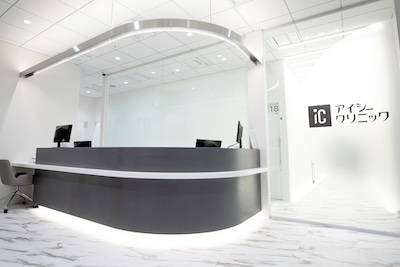
IC Clinic Tokyo — Nihonbashi Front 3F, 3-6-2 Nihonbashi, Chuo-ku, Tokyo. 3–5 min walk from JR Tokyo Station (Yaesu Exit). Hours 10:00–19:00 (closed 14:00–15:00, last reception 18:30), open Saturdays and Sundays.
Supervising physician: Kota Takakuwa, M.D., IC Clinic Tokyo