Introduction
This page is for those who wish to receive treatment for underarm odor (known in Japanese as “wakiga,” or medically, axillary osmidrosis) in Japan. In Japan, when a physician diagnoses axillary osmidrosis and determines that surgery is medically appropriate, the procedure to surgically remove the underarm sweat glands (the excision method) may be covered by public health insurance. In contrast, miraDry—which uses microwave energy to destroy sweat glands without any incisions—is a self-pay (out-of-pocket) treatment. This article uses IC Clinic Tokyo as an example to explain the differences between these two options (indications, cost, procedure time, downtime, and follow-up visits), as well as the overall process for receiving care.
Here is a summary upfront.
- Insurance-covered surgery (excision method): For patients with a 30% co-pay, the estimated cost is approximately ¥21,000 per underarm (plus a separate consultation fee and prescription costs of approximately ¥1,000–¥2,000). The procedure involves an incision along the natural underarm crease to directly remove the apocrine sweat glands responsible for odor. There will be scarring and a recovery period, and the surgery is scheduled on a separate day following an initial consultation.
- miraDry (self-pay, tax included): Standard Single-Session Plan ¥169,500 / Maximum Single-Session Plan ¥223,000 / Maximum Two-Session Plan ¥377,000 (standard prices, inclusive of anesthesia and procedure fees; no charge for counseling, initial consultation, or follow-up visits). Depending on availability, the procedure may be performed on the same day as the counseling session. No incision is made, and follow-up visits are generally not required.
- Which option is more suitable depends on the severity of odor, personal views on scarring, availability of recovery time, and cost considerations—all of which can be discussed during your consultation.
Treatment Options
IC Clinic Tokyo primarily offers three treatments: surgery (excision or flap method) (the first-line option for patients with more pronounced odor; covered by insurance), miraDry (uses heat to simultaneously target apocrine and eccrine sweat glands; self-pay), and botulinum toxin injections (to reduce sweating; effects typically last approximately 4–6 months; ¥55,000 for both underarms, tax included; self-pay [confirmation required regarding whether this may be published]). Antiperspirants, topical agents, and oral medications provide temporary relief and do not address the underlying cause of odor.
Insurance-Covered Surgery (Excision Method)
Eligibility conditions: Patients must be enrolled in Japan’s public health insurance system (eligibility is not determined solely by residency status), and a physician must diagnose axillary osmidrosis and determine that surgery is the appropriate course of treatment. The patient’s co-pay rate varies by age and income; working-age adults generally pay 30%. Insurance eligibility is verified at the reception desk using a My Number health insurance card or an eligibility confirmation document.
Estimated cost: For patients with a 30% co-pay, approximately ¥21,000 per underarm. A separate consultation fee and prescription costs of approximately ¥1,000–¥2,000 will also apply. Patients without insurance coverage will be responsible for the full cost (100% self-pay) based on the same standard fee schedule. Payment for the insurance-covered portion must be made in cash (Japanese yen).
Surgical process: During the initial consultation, the physician will perform an examination and explain the procedure; the surgery will be scheduled for a separate date (same-day surgery is not performed). The procedure is performed under local anesthesia and takes approximately 2–3 hours. [Confirmation required: surgical duration]
Scarring and downtime: Because the incision is made along the natural underarm crease, the scar often becomes less noticeable over time; however, a scar of approximately 2–4 cm will remain. After surgery, immobilization and rest of the treated area are required, and follow-up visits for suture removal and progress checks will be necessary. [Confirmation required: post-operative immobilization period, suture removal timing, and estimated return-to-work timeline for the excision method.] The degree of improvement varies among individuals; the expected outcomes and limitations will be discussed during the consultation before proceeding.
miraDry (Self-Pay Treatment)
Procedure overview: During the counseling session, the physician confirms your symptoms and marks the treatment area. Local anesthesia is then administered, followed by the microwave energy application. The treatment itself takes approximately one hour; including anesthesia and changing, the total visit is approximately 1.5–2 hours. Because no incisions are made, there are no surgical scars.
Pricing (tax included, standard rates)
Anesthesia and procedure fees are included. Counseling, initial consultation, and follow-up consultation fees are complimentary. The prices listed above are standard rates; promotional pricing may be available from time to time. Public health insurance cannot be applied. As a self-pay treatment, payment by credit card may be available.
Main risks and side effects: In the days to weeks following treatment, patients may experience pain, swelling, discomfort, firmness or lumps under the skin, bruising from anesthesia injections, altered sensation or numbness, and small blisters or rash. Most of these effects are temporary. In rare cases, persistent redness, pain, raised skin, hardening, or ulceration may occur. Partial reduction of underarm hair may also occur.
Downtime and follow-up visits: Swelling and discomfort tend to peak on the day of treatment and the following day; many patients find that discomfort resolves within approximately two weeks. Showering is permitted from the day of treatment, and bathing (soaking in a tub) is permitted from the following day—please avoid soaking in a bath on the day of treatment. The treatment is completed in a single visit and follow-up visits are generally not required; however, optional complimentary check-ups (at one week, one month, and three months post-treatment) are available. For patients who find it difficult to visit in person, remote follow-up via email or similar means is also available. [Confirmation required: check-up visit policy]
Efficacy and number of sessions: Because destroyed sweat glands are not expected to regenerate, this treatment is not designed to require repeated sessions. However, since a single session typically targets approximately 70–80% of sweat glands in the treated area, some odor may remain afterward. Depending on the severity of symptoms, a second session may be considered. Individual results may vary.
How to Choose Between the Two Options
Surgery may be a suitable option for those with more pronounced odor who wish to address it at the source through insurance-covered treatment. miraDry may be worth considering for those who cannot take extended time off from work or school, or who prefer to avoid scarring. The most appropriate option is determined based on an assessment of your symptoms during the consultation.
Steps to Receive Treatment (IC Clinic Tokyo)
- Book an appointment through the English-language reservation form (https://ic-clinic.com/en/reservation/tokyo/).
- At reception, please present your Residence Card or passport (for identity verification), and—if applicable—your My Number health insurance card or eligibility confirmation document. Patient intake forms and consent documents are available in English.
- The physician will assess the severity of your odor and perspiration, and will explain the indications, costs, and downtime for both surgery and miraDry. Communication with staff and the physician can be conducted in English with the assistance of a translation application.
- For surgery, a separate surgical appointment will be scheduled. For miraDry, the procedure may be performed on the same day depending on availability, or a separate appointment will be arranged. For the insurance-covered portion, payment must be made in cash; for self-pay treatments, cash or credit card is accepted.
FAQ
Q1. I am visiting Japan short-term and do not have Japanese health insurance. Can I still receive treatment?
A. Yes, you can still be seen at our clinic. For surgery, the full cost (100% self-pay) will apply based on the same standard fee schedule used for insured patients. miraDry is priced according to the self-pay fee schedule. Since miraDry is completed in a single visit with no follow-up visits generally required, please feel free to discuss your treatment plan in light of your available time in Japan.
Q2. How many days off from work will I need?
A. With miraDry, swelling and discomfort tend to peak on the day of treatment and the following day, and most patients are able to continue with their daily activities. Surgery (excision method) requires a period of post-operative immobilization and rest, and the number of days needed off will depend on the nature of your work. [Confirmation required: estimated return-to-work timeline for the excision method.] Please discuss this with your physician during the consultation.
Q3. Can children or teenagers receive treatment?
A. This is determined on a case-by-case basis by the physician. For minors undergoing surgery or other procedures, a parent or legal guardian must be present, or a signed consent form from a parent or legal guardian is required. For miraDry, the amount of local anesthesia that can be used is subject to weight-based limitations, so please consult with us in advance.
For patients from overseas
You do not need to speak Japanese to visit IC Clinic Tokyo. Our staff communicate using translation apps, and English intake and consent forms are available. How Japanese health insurance works, self-pay costs, payment methods and what to bring are summarised on For International Patients.
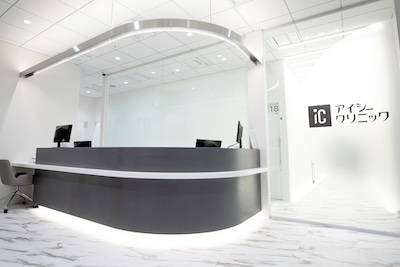
IC Clinic Tokyo — Nihonbashi Front 3F, 3-6-2 Nihonbashi, Chuo-ku, Tokyo. 3–5 min walk from JR Tokyo Station (Yaesu Exit). Hours 10:00–19:00 (closed 14:00–15:00, last reception 18:30), open Saturdays and Sundays.
Supervising physician: Kota Takakuwa, M.D., IC Clinic Tokyo