Introduction
You can visit a dermatology or plastic surgery clinic in Japan even if you do not speak Japanese. In Japan, you can generally go directly to a clinic without a referral letter. For concerns such as skin lumps, moles, warts, or underarm odor, a dermatology or plastic surgery clinic is the appropriate first point of contact.
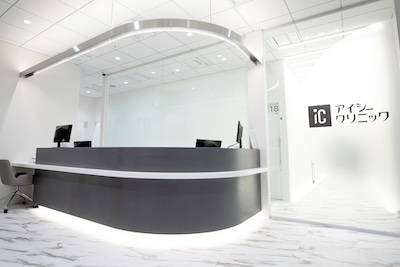
That said, there are a few Japan-specific steps to be aware of — including the reception process, medical questionnaire, insurance eligibility verification, and payment. This article explains the general process for visiting a dermatology or plastic surgery clinic in Japan as a foreign national living or staying in Japan, along with what to bring and how to prepare to minimize the language barrier. We will use IC Clinic Tokyo, located near Tokyo Station, as an example. Our services for international patients — including translation app support, English-language questionnaires, and payment options — are summarized on our For International Patients page.
Which Department Should I Visit in Japan?
- Skin growths such as epidermoid cysts, lipomas, moles, and warts — including conditions that may require surgical removal — are treated in dermatology or plastic surgery departments. IC Clinic offers same-day outpatient surgery covered by health insurance, as well as cosmetic dermatology treatments on a self-pay basis, all within our dermatology and plastic surgery practice.
- In Japan, it is common practice to visit a nearby clinic (private practice) first without a referral. If the physician determines that surgery at the clinic is not appropriate — for example, due to a large tumor or deep location — you may be referred to a university hospital or general hospital.
Preparing for Your Visit Without Japanese (Before Your Appointment)
Even if you do not speak Japanese, the following preparations can help your appointment go smoothly.
- Notes about your symptoms: When did it appear? Has the size changed? Is there any pain, redness, or discharge? Have you had any previous treatment for it? Preparing notes in English on your smartphone makes them easy to share via a translation app. Photos of the affected area showing how it has changed over time are also helpful.
- Current medications, allergies, and medical conditions: Bring something that identifies your medications (a copy of your prescription, the original packaging, or your medication record booklet), along with a note of any allergies to anesthesia or antibiotics. If you are taking blood-thinning medications (anticoagulants or antiplatelet agents), you may need to stop taking them before surgery. Whether this is safe for you must be confirmed with the prescribing healthcare provider. Please be sure to inform us at the time of your visit.
- A companion: A companion who speaks Japanese is welcome at most clinics. At IC Clinic, a companion is not required — our staff can communicate in English using a translation app at both reception and during consultations. However, if you want to make sure you fully understand detailed explanations such as surgical consent, having a companion can provide additional reassurance.
Foreign-language support varies by clinic, so please check the clinic’s website for their patient reception policy before your visit.
What to Bring
Here is what you will generally need when visiting a clinic in Japan.
- Proof of insurance eligibility (if enrolled in Japan’s public health insurance): Your My Number Card registered as a health insurance card (My Number Health Insurance Card), or your eligibility confirmation document. Please note that the conventional health insurance card expired on December 1, 2025 (Ministry of Health, Labour and Welfare).
- Photo identification: Your residence card or passport. IC Clinic requires this for identity verification purposes.
- Payment for treatment: At IC Clinic, insurance-covered treatments must be paid in cash (Japanese yen). Credit cards may be accepted for self-pay treatments. Electronic money and QR code payment are not accepted.
- Information about your current medications (as described above)
- For minors: A parent or legal guardian must accompany the patient for surgical procedures, or a consent form signed and stamped by a parent or legal guardian is required. (This is not required for a consultation or examination only.)
What happens if you are unable to verify your insurance eligibility is explained in section H2-5.
General Flow on the Day of Your Visit
- Appointment: Many clinics in Japan operate on an appointment-priority basis, and IC Clinic is no exception. Walk-in patients are welcome, but you may need to wait during busy periods. You can book an appointment at IC Clinic through our English-language online reservation form (phone reservations are in Japanese only).
- Reception: We will verify your insurance eligibility (My Number Health Insurance Card or eligibility confirmation document) and your identity, and ask you to complete a medical questionnaire. IC Clinic provides questionnaires and consent forms in English.
- Consultation: The physician will examine the affected area and may perform tests such as ultrasound as needed. You will receive an explanation of your treatment options, whether health insurance applies, and an estimate of the costs involved. The physician determines insurance applicability based on your symptoms and medical necessity.
- Treatment: For certain conditions such as epidermoid cysts, same-day surgery may be possible if the physician determines it is appropriate. For lipomas, an MRI examination is required beforehand, and surgery will be scheduled for a separate visit.
- Payment: You will pay your out-of-pocket portion (for insurance-covered treatment) or the full amount (for self-pay treatment) at the front desk and receive a receipt.
- Follow-up instructions: You will be informed of your next appointment for a follow-up check or suture removal, and given an explanation of any prescribed medications.
Understanding Costs (Insurance-Covered vs. Self-Pay Treatment)
- If you are enrolled in Japan’s public health insurance, you pay only your share of the cost at the clinic for insurance-covered treatment. The co-payment rate varies by age and income; for most working-age adults, it is generally 30%.
- If you are not enrolled in health insurance (for example, if you are on a short-term visit), you will pay the full amount out of pocket — equivalent to 100% of the insurance fee schedule — even for treatments that would normally be covered by insurance.
- If you forget to bring proof of insurance eligibility, you can still be seen. In that case, you will pay the full amount upfront. If you bring the original document and receipt to our clinic within the same calendar month, we can process a retroactive adjustment. If it is the following month or later, you will need to apply for a reimbursement through your insurer (your local government office, health insurance association, etc.).
- Estimated costs at IC Clinic (tax included): For epidermoid cyst surgery covered by insurance at the 30% co-payment rate, the total — including consultation, tests, surgery, and pathological examination — is approximately ¥10,000–¥15,000 (varies by location and size; consultation fees, prescription fees, and examination fees are billed separately). This is an estimate only; we will provide a more specific figure after your consultation.
- Medical certificates (available in English) are available for ¥5,500 (tax included) per document and are handled by post. If you need one for a travel insurance claim, please let us know at the time of your visit.
How to Book in English (at IC Clinic)
- English reservation form: Visit https://ic-clinic.com/en/reservation/tokyo/, select your symptom category and preferred date and time, and submit the form.
- If your situation is urgent — for example, if a cyst is red, swollen, or has ruptured — please mention this in the form.
- Clinic hours: 10:00–19:00 (closed 14:00–15:00; last reception at 18:30). Open on weekends; closed during the New Year holiday period.
- Access: A 3–5 minute walk from JR Tokyo Station (Yaesu Exit), 5 minutes from Nihombashi Station, and 4 minutes from Kyobashi Station (Nihonbashi Front Building 3F, 3-6-2 Nihonbashi, Chuo-ku, Tokyo). No parking available.
- Phone: 0120-140-144 (Japanese only)
FAQ
Q1. Can I visit the clinic on my own even if I do not speak any Japanese?
A. This depends on the clinic. At IC Clinic, our staff use a translation app to communicate in English at both reception and during consultations, and we provide English-language questionnaires and consent forms, so you can visit on your own. A companion who speaks Japanese is welcome but not required.
Q2. Can I be seen even if I am not enrolled in Japanese health insurance?
A. Yes. If you are not enrolled in health insurance, your visit will be treated as self-pay, and you will be asked to pay the full amount — even for treatments that would otherwise be covered by insurance. We will provide a cost estimate before treatment begins.
Q3. Can a skin lump be removed on the same day as my first visit?
A. For conditions such as epidermoid cysts, same-day surgery may be possible if the physician determines it is appropriate after examination. Lipomas require an MRI examination first, so surgery would be scheduled for a separate visit. If you would prefer same-day surgery if possible, please mention this when making your reservation.
For patients from overseas
You do not need to speak Japanese to visit IC Clinic Tokyo. Our staff communicate using translation apps, and English intake and consent forms are available. How Japanese health insurance works, self-pay costs, payment methods and what to bring are summarised on For International Patients.
IC Clinic Tokyo — Nihonbashi Front 3F, 3-6-2 Nihonbashi, Chuo-ku, Tokyo. 3–5 min walk from JR Tokyo Station (Yaesu Exit). Hours 10:00–19:00 (closed 14:00–15:00, last reception 18:30), open Saturdays and Sundays.
Supervising physician: Kota Takakuwa, M.D., IC Clinic Tokyo