Introduction
“I feel like my mole has been getting bigger.” “The color and shape look different from before.” “I don’t speak Japanese, but I want to find somewhere in Tokyo where I can be seen by a doctor.” If any of these situations apply to you, this article outlines when to consider seeing a doctor about a mole and what to expect when visiting IC Clinic Tokyo.
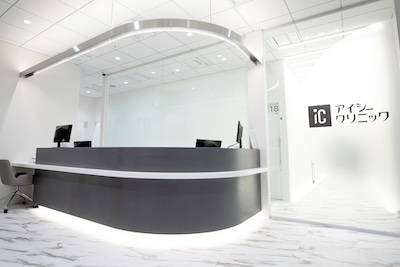
To state it plainly: whether a mole is benign or malignant cannot be determined by appearance alone. If you notice any concerning changes, the appropriate step is to have a doctor examine it and, if necessary, confirm the diagnosis through a pathological examination. IC Clinic Tokyo is a dermatology and plastic surgery clinic located a few minutes’ walk from Tokyo Station’s Yaesu Exit. Patients who do not speak Japanese are welcome to visit using a translation app. Consultations without any treatment are also available.
What Is a Mole?
A mole (pigmented nevus) is, in most cases, not present from birth but develops as nevus cells multiply in or beneath the skin during the course of a person’s life. Acquired pigmented nevi are classified into types such as Unna nevus, Miescher nevus, Spitz nevus, and Clark nevus, depending on their location and appearance. Among these, Spitz nevi tend to appear in relatively younger individuals and may occasionally grow rapidly, making it necessary to differentiate them from skin cancer (malignant melanoma).
The likelihood of a typical mole becoming cancerous is considered comparable to that of the surrounding skin. For this reason, it is important for a physician to properly evaluate whether what appears to be a mole is in fact a mole.
When to Consider Seeing a Doctor
Consider making an appointment if you notice any of the following changes or concerns. Please note that these are not diagnostic criteria—they are simply prompts to consider seeking medical advice. Their presence does not necessarily indicate malignancy, and you are always welcome to come in for a consultation even if none of these apply but you have concerns.
- A change in size, or rapid growth over a short period of time
- Asymmetrical shape, irregular or jagged borders, or uneven coloration
- Bleeding, repeated scabbing, itching, or pain
- A new mole appearing in a location where one was not present before, such as the sole of the foot or under a nail
- A mole on the eyelid that interferes with vision, one that catches on clothing or a razor during shaving, or one that bleeds when touched during face washing
Conditions That Can Be Mistaken for a Mole
Several benign skin lesions can resemble a mole in appearance, including dermatofibroma, neurofibroma, soft fibroma (skin-colored tag-like growths that tend to appear on the neck or underarms), and seborrheic keratosis (brownish raised lesions that become more common from middle age onward). On the other hand, certain skin cancers—such as basal cell carcinoma, which commonly develops on the face, and malignant melanoma, which frequently appears on the sole of the foot—can also look similar to a mole and may require surgical removal.
At IC Clinic Tokyo, a physician will examine the lesion and, where appropriate, consider a skin biopsy or pathological testing to make a proper assessment. If malignancy is suspected or more advanced treatment is required, we will promptly refer you to a general hospital, university hospital, or cancer center.
What to Expect at IC Clinic Tokyo
- Booking your appointment: Use the English-language reservation form at https://ic-clinic.com/en/reservation/tokyo/ and select the “Mole (Nevus)” category. Appointments are strongly recommended, as IC Clinic Tokyo operates on a reservation-priority basis.
- Reception: You will be asked to present your insurance eligibility documents (My Number health insurance card or eligibility confirmation document) and photo identification (residence card or passport), and to complete an English-language medical questionnaire.
- Consultation: A physician will examine the mole and assess whether there are any findings of concern. The visit may conclude with the consultation alone, or it may proceed to a discussion of treatment options.
- Treatment (if applicable): Depending on availability and the nature of the mole, same-day removal may be possible. The procedure is performed under local anesthesia, and the removed tissue is in principle sent for pathological examination at the physician’s discretion.
- Post-procedure care: The area will be protected with ointment and gauze or a bandage. A follow-up appointment for suture removal will be scheduled for approximately one to two weeks later.
Insurance Coverage and Estimated Costs
If the mole is causing symptoms that constitute a medical condition—such as obstructing vision, catching on objects, bleeding, or presenting a possibility of malignancy—surgical removal may be covered by Japanese public health insurance. Whether insurance applies will be determined by the physician at the time of consultation. If the removal is entirely for cosmetic purposes, it will not be covered by insurance and will be offered as a self-pay treatment (such as CO₂ laser removal).
As a general guide, the estimated cost of surgery under Japanese public health insurance (with a 30% patient co-payment) is approximately ¥5,000–¥14,000 for exposed areas and approximately ¥4,000–¥13,000 for non-exposed areas (such as the trunk, upper arms, or thighs). Additional charges include a consultation and prescription fee of approximately ¥1,000, a testing fee of approximately ¥1,000, and a pathological examination fee of approximately ¥3,000. Costs vary depending on the location and size of the mole. The co-payment rate differs based on age and income; for most working-age adults it is 30%. Patients who are not enrolled in Japanese public health insurance will be responsible for the full cost (100%).
How to Book and What to Bring
- Booking: English-language form at https://ic-clinic.com/en/reservation/tokyo/ (Please note that submitting the form does not confirm your appointment. Your appointment will be confirmed upon receiving a reply from our clinic.)
- What to bring: My Number health insurance card or eligibility confirmation document (if enrolled in Japanese public health insurance), residence card or passport, information about any medications you are currently taking, and cash for any insurance-covered portion of the fees
- Hours: 10:00–19:00 (closed 14:00–15:00; last reception at 18:30); open on weekends and public holidays; closed during the New Year holiday period and certain other dates
FAQ
Q. Can a mole turn into cancer?
A. The likelihood of a typical mole becoming cancerous is considered comparable to that of the surrounding skin. However, since certain skin cancers can resemble moles, we recommend having a doctor evaluate any changes that concern you.
Q. Can I come in for a consultation only and decide later whether to have treatment?
A. Yes. Visits for consultation only are welcome. If you decide you would like treatment, you will have the opportunity to hear a full explanation of the procedure and associated costs before making any decision.
Q. Can I visit if I do not speak Japanese?
A. Yes. At reception and during the consultation, we communicate in English using a translation app. An English-language medical questionnaire and consent form are also available. While you are welcome to bring a Japanese-speaking companion, it is not required.
—
For patients from overseas
You do not need to speak Japanese to visit IC Clinic Tokyo. Our staff communicate using translation apps, and English intake and consent forms are available. How Japanese health insurance works, self-pay costs, payment methods and what to bring are summarised on For International Patients.
IC Clinic Tokyo — Nihonbashi Front 3F, 3-6-2 Nihonbashi, Chuo-ku, Tokyo. 3–5 min walk from JR Tokyo Station (Yaesu Exit). Hours 10:00–19:00 (closed 14:00–15:00, last reception 18:30), open Saturdays and Sundays.
Supervising physician: Kota Takakuwa, M.D., IC Clinic Tokyo