Introduction
This article is for those who want to have warts on their hands, feet, or face treated in Japan. The standard treatment for warts at Japanese dermatology clinics is cryotherapy using liquid nitrogen, which is covered by public health insurance in most cases. However, liquid nitrogen treatment is not completed in a single session — it requires repeated visits every one to two weeks. For warts that are difficult to treat, surgical excision or out-of-pocket laser treatment may also be an option. Using IC Clinic Tokyo as an example, this article explains the differences between each approach, the conditions for insurance coverage, the estimated number of visits and costs, and what to expect at your appointment.
Here is a summary of the key points.
- When a wart is diagnosed as viral and treatment is deemed necessary, cryotherapy with liquid nitrogen and surgical excision are both covered by Japan’s public health insurance (enrollment in Japanese public health insurance is required; eligibility is determined by the attending physician).
- With a 30% co-payment, liquid nitrogen cryotherapy costs approximately ¥630–¥810 per session (depending on the number of warts; consultation and prescription fees are charged separately). Surgical excision costs approximately ¥5,000 (30% co-payment; consultation, prescription, and pathology fees are charged separately).
- Wart removal using carbon dioxide (CO2) laser is an out-of-pocket procedure not covered by insurance.
- Depending on availability and the nature of your condition, treatment may begin on the day of your consultation. You do not need to speak Japanese to be seen.
What You Should Know First: Warts Can Be Contagious or Non-Contagious
Warts (verrucae) fall into two main categories: viral warts caused by infection with human papillomavirus (HPV), and non-viral types such as seborrheic keratosis (age spots), which are associated with aging and UV exposure. Viral warts can spread to other areas of the body or to other people through small breaks in the skin, and may increase in number or grow larger if left untreated. Please avoid attempting to remove warts yourself with scissors or tweezers, as this can lead to bleeding, infection, and spread of the virus. The type of wart will be determined by the physician during your consultation, and this will affect both the treatment approach and whether insurance coverage applies.
Treatment Option 1: Cryotherapy with Liquid Nitrogen (Insurance-Covered)
This is the most common wart treatment in Japan. Liquid nitrogen is applied to freeze the wart, destroying the abnormal tissue and allowing it to fall off naturally. At IC Clinic Tokyo, cryotherapy is the first-line treatment for viral warts, repeated approximately once every one to two weeks for around two months. To minimize damage to the surrounding skin, each session is limited to approximately ten minutes of application.
Important Points to Be Aware Of
- The procedure can be painful, and discomfort may persist for one to two days afterward. Pain relief medication can be prescribed if needed.
- Blisters or blood blisters may form after treatment. Do not puncture them; if they break on their own, keep the area clean and protect it with gauze.
- Post-inflammatory hyperpigmentation (darkening of the skin) is common and may take six months to a year to fade. If you have multiple small warts on the face or neck, an alternative treatment may be recommended.
- Treatment duration varies considerably from person to person and is difficult to predict in advance.
Treatment Option 2: Surgical Excision (Insurance-Covered)
This method involves removing the wart from its root using a scalpel under local anesthesia. It is indicated for warts that have not responded to liquid nitrogen or for larger warts. The goal is to remove the wart completely in a single procedure, and the excised tissue is in principle sent for pathological examination at the physician’s discretion.
Important Points to Be Aware Of
- The anesthetic injection itself can be painful depending on the location, and some areas of the body may not be suitable for surgery.
- Since the skin is incised and sutured, scarring may occur, and a follow-up visit for suture removal will be required.
- There is a limit to the number of warts that can be treated in a single session. When there are many warts, a combination of treatment methods may be recommended.
Treatment Option 3: Carbon Dioxide (CO2) Laser (Out-of-Pocket)
This method is used when warts are numerous or when liquid nitrogen or surgery is not suitable. Under local anesthesia, the wart tissue is vaporized using a laser. There is no limit to the number of warts that can be treated in a single session, and damage to surrounding tissue is minimal; however, this procedure is not covered by public health insurance.
- Cost (tax included, standard pricing): ¥11,000 for warts under 3 mm in longest diameter; ¥16,500–¥55,000 for warts 3 mm or larger, depending on size. Promotional pricing may be available.
- Main risks and side effects: Redness after treatment, temporary hyperpigmentation, and in rare cases, scarring.
- Number of sessions: In many cases, a single session is sufficient, but additional treatment may be needed depending on the depth of the wart.
Topical medications or herbal (Kampo) medicines may also be used in combination with other treatments as a supplementary approach.
Conditions for Insurance Coverage and Estimated Costs
Conditions for insurance coverage: Enrollment in Japan’s public health insurance is a prerequisite (eligibility for enrollment is not determined solely by residency status). When the following conditions apply, the physician will determine that insurance-covered treatment is appropriate.
- A viral wart is suspected and treatment is necessary
- A wart on the eyelid obstructs vision, or a wart catches on a razor or clothing
- Surgical excision of a large wart is required
- The possibility of skin cancer cannot be ruled out and examination or excision is necessary
Some treatments — such as CO2 laser requested for cosmetic purposes — are not covered by insurance.
Co-payment rate: This varies by age and income; for most working-age adults, the standard rate is 30%. At reception, your insurance eligibility will be verified using your My Number insurance card (マイナ保険証) or insurance eligibility confirmation document.
Estimated costs (at 30% co-payment)
- Cryotherapy with liquid nitrogen: approximately ¥630 per session for 1–3 warts; approximately ¥810 for 4 or more warts. Consultation and prescription fees are charged separately.
- Surgical excision (both exposed and non-exposed areas): approximately ¥5,000. Consultation and prescription fees are approximately ¥1,000 additionally; pathological examination, if performed, costs approximately ¥3,000 additionally.
If you are not enrolled in Japanese public health insurance: Those on short-term stays and others without coverage will be charged the full amount (100%) based on the same fee schedule.
Payment methods: Insurance-covered treatment must be paid in cash (Japanese yen). Credit cards may be accepted for out-of-pocket treatments.
What to Expect at Your Visit (IC Clinic Tokyo)
- Book an appointment using the English reservation form at https://ic-clinic.com/en/reservation/tokyo/.
- At reception, present your Residence Card or passport (for identification) and, if enrolled, your My Number insurance card or insurance eligibility confirmation document. An English-language medical questionnaire is available.
- The physician will examine the type and condition of your wart and explain the recommended treatment, estimated number of visits, and expected costs. Communication with staff and the physician is conducted in English using a translation app.
- Depending on availability and your condition, liquid nitrogen, surgical excision, or laser treatment may begin on the day of your consultation. For liquid nitrogen treatment, visits are required every one to two weeks; if there is insufficient improvement, switching to surgery or laser treatment can be discussed.
There are no particular restrictions on daily activities during treatment, but it is advisable to avoid touching the wart directly with your hands and to use a separate towel from other household members.
Frequently Asked Questions
Q1. How many sessions of liquid nitrogen treatment will I need?
A. The number of sessions varies considerably from person to person and is difficult to predict in advance. At IC Clinic Tokyo, treatment is continued at a frequency of once every one to two weeks for approximately two months, and if there is insufficient improvement, switching to surgery or laser treatment will be discussed.
Q2. I had liquid nitrogen treatment for a long time in my home country but the wart did not go away. Are there other options?
A. Some warts are difficult to treat with liquid nitrogen alone. Depending on the condition, surgical excision (insurance-covered) or CO2 laser treatment (out-of-pocket) may be recommended. Please share your treatment history with the physician at your consultation.
Q3. I am on a short-term stay and do not have health insurance. Can I still receive treatment?
A. Yes, you can still be seen. You will be charged the full amount (100%) based on the same fee schedule as insurance-covered treatment. Since liquid nitrogen requires repeated visits, please discuss your treatment plan with the physician, taking your length of stay into account.
For patients from overseas
You do not need to speak Japanese to visit IC Clinic Tokyo. Our staff communicate using translation apps, and English intake and consent forms are available. How Japanese health insurance works, self-pay costs, payment methods and what to bring are summarised on For International Patients.
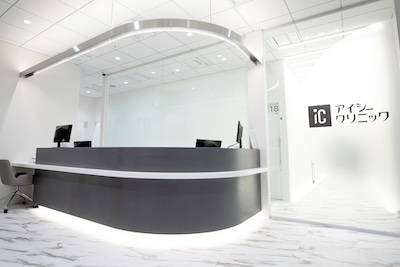
IC Clinic Tokyo — Nihonbashi Front 3F, 3-6-2 Nihonbashi, Chuo-ku, Tokyo. 3–5 min walk from JR Tokyo Station (Yaesu Exit). Hours 10:00–19:00 (closed 14:00–15:00, last reception 18:30), open Saturdays and Sundays.
Supervising physician: Kota Takakuwa, M.D., IC Clinic Tokyo